


From the Triangle to the Circle
Matriarchal Governance Design for Practitioners
Draft governance documents that hold power in relationship, not position.
Indigenous/Native attendees free • Led by Maija West & Adrian Seneca Bello
Quick Overview
Friday, Oct 9
9-11 AM PT
Live on Zoom
2 breakouts + opening & closing circle
$40-$400
Reciprocity model; Indigenous/Native free
Bring 1 document
Bylaws, MOU, member agreement…
The Shift
The triangle
Authority at the apex. Conflict as threat. Fiscal-year time horizon. Accountable to funders first.
The circle
Authority as relationship. Conflict as information. The long future in every decision. Accountable to community and land.
"The governance documents you draft are never neutral. They always encode a theory of authority."
-
The governance documents you draft every day — the charters, the bylaws, the MOUs, the member commitments, the term sheets — encode a theory of authority. They tell a story about who holds power, how it flows, what happens when something goes wrong, and who the organization is ultimately accountable to.
Most of the time, that story is the triangle: authority at the apex, cascading downward, resolved by whoever sits higher up, measured in fiscal years and board terms, accountable to funders and regulators before it is accountable to the community and the land.
There is a different story. It is older, more resilient, and more rigorous than the triangle. It is the circle — the governance architecture of matriarchal systems that have survived centuries of occupation, colonization, and suppression precisely because they hold authority in relationship rather than in position, hold conflict as information rather than as threat, and hold the long future in every significant decision.
This two-hour course introduces that story — with precision, with evidence, and with the specific drafting framework that practitioners can carry back into the documents they write and the organizations they serve.
"The governance documents you draft are never neutral. They always encode a theory of authority. This course shows you what that theory is — and gives you the tools to change it."
What You’ll Learn
1 • What matriarch is
OED definition vs. gynarchy, feminism, patriarchy
2 • See the triangle
What hierarchy produces and can’t hold
3 • Living matriarchies
Haudenosaunee, Baltic Peoples and more
4 • Six core principles
Each with a drafting question
5 • Diagnose your document
Breakout 1
6 • Draft something different
Breakout 2
You’ll leave with: a first draft of a circle-governance provision from your own practice.
Session Flow
Opening circle
Arrive, orient
Teaching
Triangle, circle, principles
Breakout 1
Diagnose your document
Breakout 2
Draft a circle alternative
Closing circle
Commitments
Who It’s For
Attorneys & Legal Practitioners
who draft governance documents and want to draft them differently.
Mediators & Peacemakers
who understand that conflict resolution and governance design are the same work.
Tribal & Indigenous Governance Leaders
who are building or rebuilding governance structures that reflect their communities' traditions.
Nonprofit Executives & Board Members
who are frustrated by the triangle governance of their own organizations.
Community Leaders
who are building governance structures accountable to their communities and to the land.
Governance Consultants & Facilitators
who want a more rigorous framework for their client work.
Practitioners of all genders
who are earnestly seeking a way to practice that is more life-affirming.
-
you are looking for a soft alternative to rigorous governance. This course offers a more rigorous one. It requires honest examination of the systems you work within and a genuine willingness to draft, facilitate, and hold governance differently. If you are not ready to look at your own documents with a critical eye, this course will feel uncomfortable. That discomfort is the work.
Course Testimonials
"What I appreciated most about the course was the validation and peace it brought me, knowing we can use language as a healing tool in human contracts and agreements as well."
— Nikki W.Facilitators
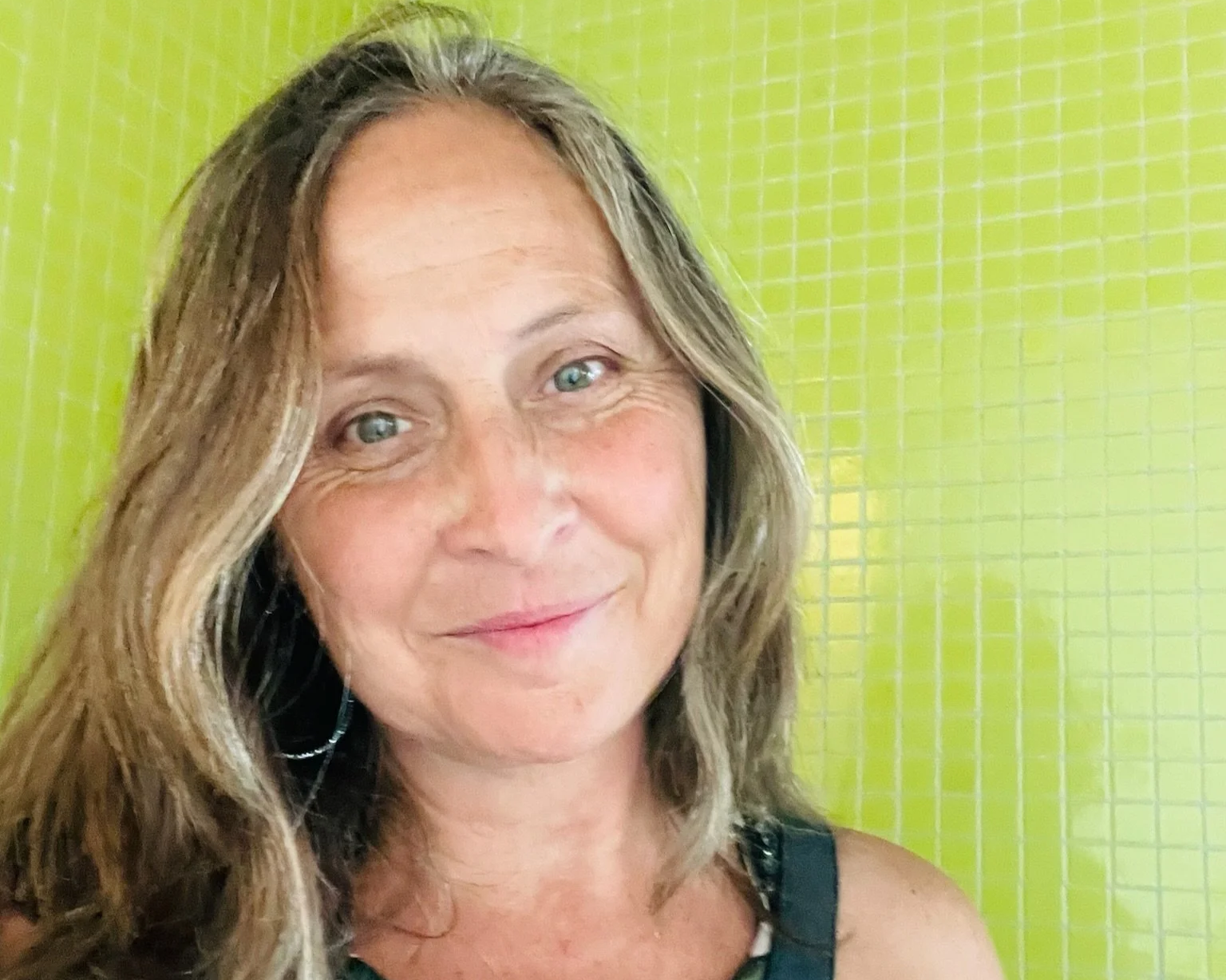
Former attorney (15 yrs), mediator, peacemaker. Co-founder, Healing and Reconciliation Institute. Author, Matriarch Makeover.
Maija Danilova West
-
Maija Danilova West is a business consultant, mediator, and peacemaker with fifteen years of practice as an attorney in land use, business law, philanthropy, and nonprofit governance. She has advised nonprofits, foundations, Tribal Nations, businesses, and public agencies across all three sectors on governance, conflict resolution, and organizational change.
A dual citizen of Latvia and the United States, Maija's governance work is informed by the matrilineal cultural traditions of her Latvian heritage and by twenty-five years of practice alongside Indigenous communities, including her work as co-founder of the Healing and Reconciliation Institute.
She disclaimed her law license as an act of conscience, having concluded that the current US legal system — in all three of its branches — structurally supports patriarchy. She now works to help practitioners build governance structures that hold what the triangle cannot: lineage, community, ecological accountability, and the long future.
She is the author of Matriarch Makeover: A 30-Day Invitation and the forthcoming From the Triangle to the Circle: Matriarchal Governance Design.

Adrian Seneca Bello
Seneca community weaver, facilitator, mediator, farmer. Anthropology, UC Berkeley.
-
My name is Adrian Seneca Bello. I am of Seneca (Onöndowa;ga:') Irish, Scottish, and Polish descent. I was raised on the Ohlone lands of the East Bay Area in California, where I learned early what it means to live between worlds. My path of cultural in-betweenness has shaped my life’s work as a community weaver, bridge builder, facilitator, and peacemaker.
I hold a degree in Anthropology with a minor in Native American Studies from the University of California, Berkeley. My early years were spent organizing around cultural preservation, fighting for creative autonomy and access to space in the rapidly gentrifying Bay Area. That work eventually led me to questions of food sovereignty and land-based living.
Since then, I have worked with a range of grassroots initiatives, gathering people across differences to co-create spaces of healing, dialogue, and resilience. Whether as a farmer, facilitator, or mediator, I have witnessed both the power and the challenge of reconnecting human communities with one another and the Earth.
Today, I live and work in Seneca territory in upstate New York, where I serve as a farmer and facilitator committed to ancestral healing and community renewal. My work is guided by the belief that remembering who we are—and the responsibilities we carry as human beings—is essential to building a future grounded in sovereignty, reciprocity, and collective wellness.
Register
Reciprocity model
Suggested $40-$400. No one is turned away. Indigenous/Native attendees free.
Reassurance
Can’t make it? Transfer your spot, use your credit, or gift it back to the community.
Questions? Fill out the contact form or email info@maijawest.com
Frequently Asked Questions
(click each question below to see the answer)
-
No. This course is for practitioners of all genders. Matriarchal governance is not the exclusion of men from governance — it is a different structural relationship between women's authority and collective decision-making. The circle includes everyone. Men who have found the triangle exhausting — who have reached the apex and found it less satisfying than it looked from below — often find the most in this framework.
-
No. The course is designed to stand on its own. If you have read Matriarch Makeover, you will recognize the personal governance foundation the course builds on. If you have not, everything you need will be introduced in the session. The forthcoming book From the Triangle to the Circle will go deeper into every dimension the course introduces.
-
No, not in the conventional sense. Feminism is a movement organized primarily around equity — around women's equal access to structures designed without them. This course is about something older and structurally different: the formal definition of matriarchy, the governance architecture of the circle, and the specific tools practitioners need to build governance that holds what the current system cannot. The goal is not equity within the triangle. It is the dissolution of the triangle.
-
Yes — and it may be the most uncomfortable two hours you spend in professional development this year. The course shows you, with specificity, how every standard governance document you have ever drafted encodes a governance theory you may not have chosen consciously. It then gives you a principled framework and a drafting practice for doing it differently. You will leave with a first draft of a circle-governance provision in your own practice area.
-
Yes, with an important caveat. The course approaches Indigenous governance traditions — particularly the Haudenosaunee Confederacy — with the posture of a good guest: coming with something to offer, listening before interpreting, attributing knowledge to its source, and remaining accountable to the communities whose wisdom is being learned from. The course is not a substitute for direct relationship with Indigenous communities and their governance knowledge. It is an introduction to a framework that honors the sovereignty and governance wisdom of those communities and supports practitioners in working within that framework with integrity.
-
Not yet. We are still working out a way to record that will be helpful to those who attend.
-
Due to the nature of event planning, we are unable to offer refunds for cancellations, except under exceptional circumstances (e.g., medical emergency, death in the family). These will be reviewed on a case-by-case basis.
If you are no longer able to attend, you may:
Transfer your spot to another attendee (pending our approval),
Use your credit towards a future offering, or
Gift your space back to the community for someone in financial need (if time and logistics allow).
-
This class is open to anyone who’d like to take it and is offered on a reciprocity model. NO ONE is turned away for lack of funds. A sliding scale contribution of $40-$400 USD per attendee is suggested for those who can afford it.
*Indigenous/Native attendees are welcome to attend free of charge.
Related Offerings

The Book: Matriarch Makeover
BOOK

2026 Book Circle: “Matriarch Makeover”
BOOK CIRCLE

Matriarch Member Circle
ONLINE COMMUNITY